Tested 8 Meditation Apps for My Parents: Here’s What Finally Helped Them Sleep and Stay Calm
Many of us worry about our aging parents—how they’re coping, whether they’re truly okay when we’re not around. I noticed my mom was restless, anxious, and sleeping poorly. Medications didn’t help much. Then I discovered meditation apps weren’t just for stressed millennials. After testing several with her, something shifted. She began sleeping deeper, worrying less, and even smiled more. This isn’t about tech for tech’s sake—it’s about real relief, calm, and connection in later years. And if you’ve ever sat by the phone wondering if your parent is truly at peace, this might be the gentle change they’ve been waiting for.
The Quiet Struggle No One Talks About
There’s a kind of loneliness that doesn’t always show up in phone calls or family visits. It’s the kind that settles in during quiet afternoons, when the house feels too big and the days stretch too long. My mom never said she was unhappy. But I started noticing the little things—how she’d wake up tired even after eight hours, how she’d pace the kitchen late at night, or how her voice would tighten when talking about her health. She wasn’t depressed, not exactly. But she wasn’t at ease either. And I realized, she wasn’t alone. So many parents in their 60s, 70s, and beyond carry quiet burdens—worry about their bodies slowing down, fear of becoming a burden, or grief that never quite finds its way out. These feelings don’t always show up on a doctor’s chart, but they shape every day.
What made it harder was that most solutions felt either too medical or too extreme. Pills helped a little, but left her groggy. Therapy? She appreciated the idea, but said it felt “too heavy” for everyday worries. And honestly, I didn’t want to pathologize her feelings. I just wanted her to feel lighter, more like herself. Then one night, while searching for anything that might help with sleep, I stumbled on a meditation app review. I almost scrolled past it—meditation always seemed like something for yoga-loving 30-year-olds, not my mom who preferred crossword puzzles and afternoon naps. But something made me pause. What if calm wasn’t something you either had or didn’t? What if it could be practiced, like stretching a stiff muscle? That thought changed everything.
Why Meditation? And Why Now?
Let’s be honest—when I first suggested meditation to my mom, she laughed. “You mean sitting cross-legged and humming?” she said. “I can barely get up from the couch.” I didn’t blame her. The word “meditation” comes with a lot of baggage—images of silent retreats, incense, and people who seem way too peaceful to be real. But what I’ve learned, especially for older adults, is that meditation doesn’t have to look any certain way. It’s not about emptying your mind or achieving enlightenment. It’s about giving your thoughts a little space, like stepping back from a crowded room to catch your breath. Think of it as mental stretching—something gentle you do to keep your inner world flexible and resilient.
Science backs this up, even if we don’t need to name the studies. Regular, simple meditation has been shown to help older adults sleep better, feel less anxious, and even improve memory over time. It’s not magic—it’s about training the nervous system to shift out of “alert mode” and into “rest mode.” And the best part? It’s accessible. You don’t need special clothes, a quiet cabin in the woods, or hours of free time. Just a few minutes, a chair, and a voice guiding you to breathe. For someone who’s spent decades caring for others—raising kids, managing a home, supporting a spouse—this kind of self-care can feel radical. Not because it’s complicated, but because it’s permission to pause. And honestly, isn’t that what so many of our parents need? Not more tasks, but more moments of peace.
How We Tested Apps Together
I downloaded eight different meditation apps, thinking surely one would click. I imagined my mom tapping open an app, listening to a soothing voice, and drifting into calm like in the commercials. Reality was messier. The first app had a sleek design, but the buttons were tiny, and she kept accidentally closing the session. “I just wanted to play it,” she said, “not solve a puzzle.” Another had beautiful music but rushed through instructions like a news anchor. “I couldn’t keep up,” she told me. “It felt like I was failing before I even started.”
Then there was the app that assumed you already knew how to meditate. It said things like “focus on your third eye” or “release your energetic blockages.” My mom looked at me and said, “I don’t even know where my third eye is—can I just breathe?” We both laughed, but it was also a little heartbreaking. So much of the tech out there is built for people who already feel confident with screens, who don’t mind learning new systems. But for someone who didn’t grow up with smartphones, every extra tap, every unfamiliar word, adds up to stress—not calm.
What surprised me, though, was how much this became a shared journey. We’d sit together on the couch, her with the tablet, me guiding her fingers to the right spot. We’d try a session, then talk about it afterward. “Did that voice feel too fast?” “Was the music too much?” It wasn’t just about finding the right app—it was about showing her that her comfort mattered. That her pace was valid. And slowly, she started to relax, not just during meditation, but in the process itself. She wasn’t learning to meditate to fix herself. She was being seen, and that made all the difference.
The App That Actually Worked—And Why
After weeks of trial and error, we found one app that felt different from the start. The home screen was simple—just three big buttons: “Calm Mind,” “Better Sleep,” and “Ease Pain.” No menus, no pop-ups, no confusing icons. The text was large, the colors soft, like morning light. When she tapped “Better Sleep,” a woman’s voice came on—warm, unhurried, with a slight Southern lilt that reminded her of her aunt. “Let your body settle,” she said. “You don’t have to do anything. Just be here.” My mom exhaled like she’d been holding her breath for years.
What made this app work wasn’t flashy features—it was thoughtfulness. Sessions were short, between five and ten minutes, perfect for someone who didn’t want to commit to a long practice. The language was plain: no “chakras,” no “mantras,” just simple phrases like “let your shoulders drop” or “breathe in calm, breathe out worry.” And the voices—all women, all older-sounding, with a tone that felt like a trusted friend, not a performer. One of my favorite features was the offline mode. Once downloaded, she could use it anywhere, even in the hospital during her knee surgery. No Wi-Fi, no stress—just calm, on demand.
But the real game-changer was the reminder system. I set it up to gently prompt her at 8:30 p.m., right after her tea. At first, she ignored it. Then one night, she said, “That little bell went off, and I thought, why not?” She played a sleep meditation and fell asleep halfway through. The next morning, she said, “I don’t remember the whole thing, but I slept like I was wrapped in a blanket.” That’s when I knew—we weren’t just using an app. We’d found a new ritual, a tiny anchor in her day that asked nothing of her but presence.
Real-Life Moments Where It Made a Difference
The first time I saw real change was during a bad thunderstorm. My mom has always hated loud weather—ever since her house lost power during a hurricane years ago. That night, the wind howled, the lights flickered, and I could hear her moving around over the phone. “I can’t sit still,” she said. “My heart’s racing.” I suggested she try the app. “Just one session,” I said. “You don’t have to fix how you feel—just listen.” Twenty minutes later, she called back. “I did it,” she said. “I pressed play, lay down, and followed that woman’s voice. I didn’t stop the storm, but I stopped fighting it. I felt… okay.” That moment taught me something important: meditation isn’t about escaping hard feelings. It’s about not being overwhelmed by them.
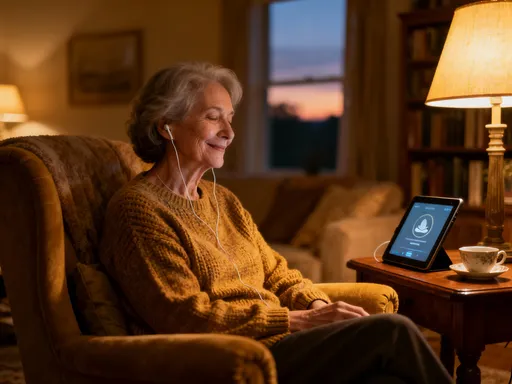
Another time, she had a doctor’s appointment for a persistent cough. The waiting room was full, the air thick with worry. She texted me: “So many sick people here. I’m nervous.” I reminded her about the app. She pulled out her tablet, put on headphones, and played a five-minute “Calm Mind” session. Afterward, she said, “It didn’t change the wait, but it changed how I felt in it. I wasn’t spinning in my head anymore.” She even chatted with the woman next to her—something she wouldn’t have done before. Small shift, big impact.
And then there was Thanksgiving. My brother’s family came over, kids running, music loud, the house buzzing. In past years, she’d retreat to her room, overwhelmed by the noise. But this time, she stayed in the living room, quietly used the app on her tablet for a few minutes when it got too much, then rejoined the fun. “I took a little break,” she said, “and came back ready.” That’s the quiet power of this practice—not isolation, but regulation. She wasn’t shutting out life. She was learning to move through it with more ease.
Making It a Natural Part of Daily Life
Getting started was the hardest part. At first, I kept asking, “Did you do your meditation?” and she’d sigh, “Not yet.” It felt like another chore, another thing she was supposed to do right. So I changed my approach. Instead of pushing, I focused on pairing it with something she already loved—her evening tea. Now, after she pours her chamomile, she picks up the tablet. It’s not “meditation time”—it’s “tea and quiet time.” That small link made all the difference. Habits stick better when they’re attached to something familiar.
I also set up a little “calm corner” in her living room—a comfy chair, a soft blanket, her tablet on a stand so she didn’t have to hold it. I made sure the app was always on the home screen, one tap away. And I encouraged her to start small—just two minutes, no pressure. “You don’t have to finish the session,” I said. “Just press play and see how you feel.” Some days, she only listens for a minute. Others, she falls asleep halfway through. And that’s okay. The goal isn’t perfection. It’s presence. It’s showing up for herself, even in tiny ways.
One thing I’ve learned: older adults don’t need more instructions. They need invitation. They don’t want to be corrected—they want to be supported. So instead of saying, “You’re doing it wrong,” I say, “I’m so proud of you for trying.” Instead of focusing on the missed days, I celebrate the ones she shows up. And slowly, it’s become hers—not my project, not my idea, but her practice. She even told her friend at book club about it. “It’s like having a calm voice in your pocket,” she said. That’s the dream, isn’t it? Not just better sleep or less anxiety, but a sense of agency—that at any age, you can choose peace.
More Than Just an App—A New Kind of Care
This journey changed more than my mom’s sleep. It changed us. Before, I worried from a distance, calling to check in, hoping she was okay. Now, we share something real—a practice, a moment, a quiet understanding. When she texts me, “I did my meditation,” it feels like a quiet victory. Not because she’s fixed anything, but because she’s caring for herself in a new way. And that gives me more peace than any doctor’s report ever could.
But here’s what I didn’t expect: it brought us closer. We talk differently now. Not just about symptoms or pills, but about how she feels in her body, what worries her, what brings her joy. Meditation didn’t replace our conversations—it deepened them. And in a way, it gave her a voice she didn’t know she’d lost. She’s not just my mom anymore. She’s someone rediscovering her own strength, one breath at a time.
This isn’t about replacing human connection with technology. It’s about using tech to enhance it. The app isn’t a substitute for love or presence. But it is a bridge—to calm, to rest, to self-compassion. And for parents who’ve spent a lifetime giving, it’s a gentle reminder that they still matter, their peace still matters. Aging doesn’t have to mean shrinking. It can mean settling into a deeper kind of strength. With the right tools, the later years don’t have to be about decline. They can be about dignity, presence, and quiet joy. And if a simple app can help someone sleep better, worry less, and feel more like themselves—well, isn’t that the kind of future we all want for the people we love?