From Overwhelmed to Fully in Control: How Personal Growth Apps Finally Made My Days Feel Possible
Life used to feel like a never-ending to-do list—juggling work, self-care, and personal goals left me drained and distracted. I’d try journaling, then forget. I’d set goals, then lose momentum. But everything shifted when I discovered personal growth apps that truly adapted to me. They didn’t demand perfection—they learned my rhythm, whispered gentle reminders, and celebrated small wins. Now, progress feels natural, not forced. This isn’t about hustle; it’s about harmony. And if you’ve ever felt like you’re trying too hard just to keep up, this is for you. These tools didn’t change my life overnight, but they gave me something I’d been missing: a sense of gentle, steady forward motion. And that, I’ve learned, makes all the difference.
The Breaking Point: When Self-Improvement Started Feeling Like Another Chore
Remember that burst of motivation you get after a heart-to-heart with a close friend, or right after a quiet Sunday morning with a cup of tea? That’s when we usually decide: this is the week I start journaling. This is the month I finally meditate every day. This is when I get my life together. I’ve been there so many times. I’d download a new app, set up my goals with such hope, and even take a proud screenshot to show my progress. But then, life happened. The kids got sick. Work deadlines piled up. I stayed up too late, woke up exhausted, and suddenly, that morning gratitude practice felt like one more thing I was failing at.
What I didn’t realize then was that the problem wasn’t me. It wasn’t lack of discipline or willpower. The real issue was that the tools I was using weren’t built for real life. They were designed for someone who has perfect routines, zero stress, and endless energy. And when I missed a day—just one—I’d see that red X on my habit tracker, and it would whisper, “You’ve already failed.” So I’d give up. Over time, I started to believe I just wasn’t the kind of person who could stick with self-improvement. But that belief wasn’t true. It was just the result of using tools that didn’t understand me.
Here’s what no one talks about enough: growth isn’t linear. Some days, you’ll journal for ten minutes. Other days, you’ll barely have the energy to log in. And that’s okay. The goal isn’t perfection—it’s showing up, in whatever way you can. What I needed wasn’t another rigid system. I needed something flexible, something that could meet me where I was, not where I “should” be. And that’s exactly what I found in the right personal growth app. It didn’t scold me for skipping a day. It asked, “Hey, what’s going on?” And that small shift—from judgment to curiosity—changed everything.
What Really Is a Personal Growth App? (And Why Most of Us Get It Wrong)
When I first heard the term “personal growth app,” I pictured something like a digital notebook or maybe a fancy to-do list with motivational quotes. I thought it would be another place to write down my goals and check them off, just like I’d done a hundred times before. But I was wrong. A true personal growth app isn’t just a tracker—it’s more like a quiet companion that walks beside you, learns your pace, and helps you stay on your path without pressure.
Think of it like this: if a regular planner is a map, a personal growth app is a GPS. A map shows you the route, but it doesn’t adjust when you take a wrong turn or hit traffic. A GPS, on the other hand, recalculates in real time. It says, “Okay, you missed that exit—no problem. Here’s a new way forward.” That’s the kind of support these apps offer. They don’t just record what you do—they respond to it. They notice patterns. They learn when you’re most alert, when you tend to skip routines, and what kind of encouragement actually works for you.
And here’s the beautiful part: they’re not about pushing you harder. They’re about helping you move forward in a way that feels right for your life. For example, instead of sending a generic “Don’t forget to meditate!” notification at 7 a.m., a smart app might learn that you’re usually rushing to get the kids to school then. So it waits. It sends a gentle nudge at 6:30 p.m., when you’re winding down, and says, “You’ve had a long day. Want to try a 3-minute breathing exercise?” That small change—from timing to tone—makes it feel less like a demand and more like a kind suggestion from a friend who knows you well.
These apps also go beyond habits. They help with emotional awareness, goal setting, reflection, and even values alignment. They might ask, “What’s one thing that made you feel calm today?” or “Looking back, what small step felt meaningful?” These aren’t just questions—they’re invitations to slow down and notice what’s really happening in your life. And over time, that awareness becomes its own kind of growth.
The Magic of Personalization: When the App Knows You Better Than You Know Yourself
There’s something quietly powerful about an app that starts to understand you. Not in a creepy way—nothing invasive or pushy. But in a way that feels thoughtful, almost intuitive. I remember the first time it happened to me. I had been using a new app for about two weeks, mostly logging how I felt each morning and checking in on my goals. One evening, after a particularly hectic day, I opened the app, and instead of its usual prompt, it said, “You’ve had three busy days in a row. Would you like a shorter reflection tonight?” I actually laughed. It was right. I had been rushing, skipping meals, and staying up late. I hadn’t even realized how much I’d been pushing myself—until the app gently pointed it out.
That’s the magic of personalization. These apps use simple feedback loops—your inputs, your patterns, your responses—to learn what works for you. They don’t rely on complex algorithms alone. They grow smarter because you teach them. The more you use them, the more they adapt. For example, if you consistently skip journaling in the morning but often reflect at night, the app might start offering evening prompts instead. If you respond better to kind, encouraging language than to bold, energetic messages, it adjusts its tone. It’s like having a personal coach who pays attention—not just to what you do, but to how you feel while doing it.
One of my favorite features is how some apps notice emotional patterns. After a few weeks, mine began to recognize that on days when I wrote about feeling overwhelmed, I was more likely to skip my evening walk. So it started suggesting a five-minute stretch or a calming playlist instead—something small, doable, and kind. It wasn’t trying to fix me. It was helping me care for myself in the moment. And that subtle difference—between fixing and caring—made all the difference in whether I kept going.
Personalization also means timing. We’ve all been annoyed by notifications that pop up at the worst possible moment. A good app learns when you’re most receptive. Maybe you’re not a morning person, so it doesn’t bombard you with affirmations at 6 a.m. Maybe you need quiet after dinner to reflect, so it waits until then to send a gentle check-in. These small adjustments don’t just reduce friction—they build trust. You start to feel like the app is on your side, not against you.
Morning Routines Reimagined: How a Simple Check-In App Changed My Mornings
Mornings used to be my nemesis. I’d wake up already behind—laundry to fold, breakfast to make, lunches to pack. I’d rush through my routine, barely noticing how I felt, and by 9 a.m., I’d already be drained. I tried every “perfect morning routine” I read about: meditation, journaling, stretching, lemon water. But none of them stuck. They felt like another performance to get right, and when I failed, I felt worse.
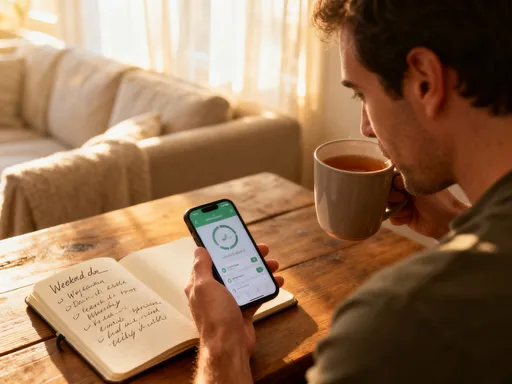
Then I started using a simple check-in app that asked just two questions every morning: “How are you feeling today?” and “What’s one small thing you’d like to focus on?” That’s it. No pressure, no checklist. At first, I’d answer with one word: “Tired.” “Stressed.” “Busy.” But over time, something shifted. Because the app didn’t judge my answers, I started being more honest. And because it remembered my past responses, it began to offer gentle suggestions. On days I said I felt overwhelmed, it might say, “Would a two-minute breathing exercise help?” On days I felt hopeful, it might ask, “What’s one thing you’re looking forward to?”
The real change wasn’t in the app—it was in how I started to treat myself. Instead of rushing past my feelings, I began to pause. That two-minute check-in became a tiny act of self-respect. I wasn’t trying to “fix” my mood. I was just acknowledging it. And that small moment of awareness made the rest of my morning feel more grounded.
What surprised me most was how flexible the app was. Some days, I had ten minutes to reflect. Other days, I had thirty seconds. The app didn’t care. It met me where I was. And on the rare mornings when I completely forgot to open it, it didn’t shame me. The next day, it simply asked, “Welcome back. How are you feeling today?” No guilt, no red X. Just a fresh start. That kindness kept me coming back. Over time, my mornings didn’t become “perfect,” but they became more peaceful. I wasn’t chasing an ideal—I was building a routine that fit my real life.
Growing Alongside Your Goals: Apps That Evolve as You Do
Here’s a truth we don’t talk about enough: goals change. That dream you had last year might not feel right this year. And that’s not failure—it’s growth. But most goal-tracking tools don’t account for that. They lock you into a plan and make it hard to shift. If you wanted to run a 5K in June but life got busy and you didn’t train, most apps treat that as a loss. But life isn’t that simple. Maybe you didn’t run the race, but you started walking more. Or you got better sleep. Or you learned to listen to your body. Those are wins too.
What I love about modern personal growth apps is that they don’t just track progress—they honor the journey. They allow you to update your goals, reflect on why they changed, and set new intentions without starting over. For example, when I shifted from wanting to “lose weight” to wanting to “feel stronger,” my app didn’t treat that as a reset. It helped me redefine success. It asked, “What does feeling stronger look like for you?” and “What small steps support that?” That shift—from outcome to intention—made all the difference.
These apps also use adaptive milestones. Instead of saying, “You must meditate 30 days in a row,” they might say, “You’ve meditated 8 times this month—how did it feel?” or “You’ve been consistent on weekends. Want to try one midweek session?” It’s not about rigid targets. It’s about noticing what’s working and building from there. And when life gets messy—when you’re grieving, stressed, or just tired—the app doesn’t disappear. It might offer a simpler prompt: “No need to do anything big today. Just breathe.” That flexibility keeps you connected, even when you’re not “productive.”
One of the most powerful features is the ability to look back. Some apps create gentle summaries of your journey—“This month, you journaled 12 times. You mentioned feeling proud three times.” That kind of reflection doesn’t just show progress. It helps you see your own resilience. You start to notice patterns you might have missed: how your mood improves after walks, how writing helps you sleep, how small acts of self-care add up. And that awareness becomes its own reward.
Quiet Confidence: How Tiny, Tailored Wins Build Real Self-Belief
We’re taught to celebrate big wins—landing the job, hitting the goal weight, finishing the project. But real confidence doesn’t come from those moments alone. It grows from the small, quiet victories: the day you journal even though you’re tired, the morning you choose rest over guilt, the moment you say, “I did enough.” These are the moments that build true self-trust.
Personal growth apps help you see those moments. They don’t just track what you do—they highlight what it means. For example, after a week of short meditations, my app didn’t just say, “You meditated 4 times.” It said, “You made space for calm this week. How did that affect your sleep?” That connection between action and impact is powerful. It turns a habit into a meaningful choice. And over time, those choices add up to a quiet, steady confidence.
I’ve noticed that the more I use my app, the less I compare myself to others. I’m not trying to be the most productive person in the group chat. I’m not chasing someone else’s version of success. I’m learning what works for me. And that’s freeing. The app doesn’t tell me I’m falling behind. It shows me how far I’ve come, in my own way. It says, “You’ve been consistent with reflection. That takes courage.” And hearing that—especially on days when I feel like I’m barely holding it together—makes a difference.
This kind of confidence isn’t loud. It doesn’t come with fanfare. It’s the kind that lets you say, “I’m not perfect, but I’m trying,” and mean it. It’s the voice that says, “You’ve handled hard things before. You can handle this.” And it grows not from grand achievements, but from showing up, again and again, in small, honest ways. The app doesn’t create that confidence—it helps you notice it.
Making It Yours: Simple Steps to Find and Customize an App That Fits Your Life
If you’re curious about trying a personal growth app, I get it—there are so many out there. And not all of them are right for everyone. The good news is, you don’t need to be tech-savvy to find one that works. Start by asking yourself: what do I really need right now? Is it more emotional awareness? Better routine support? A space to reflect without pressure? Once you know your intention, you can look for apps that focus on that.
Look for apps that feel kind, not demanding. Check the reviews—do people say it feels supportive? Is the language warm and encouraging? Avoid anything that feels shaming or overly rigid. Also, pay attention to privacy. Make sure the app explains how your data is used and stored. You should feel safe sharing your thoughts, not worried about them being sold or shared.
When you pick one, take your time setting it up. Don’t rush to fill in every goal. Start small. Maybe just answer one daily check-in for a week. See how it feels. Then, customize it. Most apps let you adjust notification times, choose your tone of voice (gentle vs. energetic), and even pick the kind of prompts you get. If you hate affirmations, skip them. If you love journaling, add more space for it. This is your tool—make it work for you.
One tip: sync it with your natural rhythm. If you’re not a morning person, don’t force morning check-ins. Set them for afternoon or evening. If you forget to open it during the day, try linking it to an existing habit—like after your coffee or before bed. The easier it is to use, the more likely you are to stick with it. And remember, it’s okay to switch apps if one doesn’t feel right. This isn’t about loyalty—it’s about finding what helps you feel more like yourself.
Conclusion: Growth That Feels Human, Not Robotic
Personal growth isn’t about becoming someone else. It’s about coming home to yourself—bit by bit, day by day. The right app doesn’t turn you into a productivity machine. It helps you move through life with more awareness, more kindness, and more connection to what matters. It doesn’t replace your inner wisdom. It amplifies it.
What I’ve learned is that growth doesn’t have to be loud or dramatic. It can be quiet. It can be as simple as noticing how you feel, choosing one small act of care, and letting that be enough. The apps that support us best aren’t the ones that push us harder. They’re the ones that walk beside us, learn our pace, and remind us—gently—that we’re already doing better than we think.
If you’ve ever felt like you’re running on empty, like you’re trying to grow but keep hitting walls, I want you to know: it’s not you. It might just be the tools you’re using. When you find one that adapts to you—not the other way around—something shifts. You start to feel seen. Supported. Capable. And that feeling? That’s the real foundation of change. Not perfection. Not speed. Just the quiet, steady belief that you’re moving forward, in your own way, and that’s more than enough.